
Mold Resource
July 14, 2026
What to Do When You Find Mold in Your Home
Start with the moisture source, avoid spreading contamination, and decide whether the affected area is appropriate for professional remediation.
Read guideProfessional mold remediation for homes, multifamily properties, and commercial buildings across Metro Atlanta. We identify the moisture pathway, protect clean areas, remove affected materials, and help move the property toward a dry, usable condition.
Stop the water or humidity problem, avoid spreading the affected material, and determine how much of the building is involved. Small areas on hard surfaces may be manageable, while larger, concealed, porous, or water-damage-related growth often needs a controlled remediation plan.
The useful scope depends on moisture, affected materials, occupants, HVAC pathways, size, access, and whether the growth is visible or hidden.
Containment, removal, cleaning, drying, and moisture-focused remediation for residential and commercial mold projects.
Explore serviceProfessional removal of mold-damaged porous materials and cleaning of salvageable surfaces after the moisture source is addressed.
Explore serviceA visual and moisture-focused evaluation used to locate visible growth, damp materials, and conditions that support mold.
Explore serviceTargeted air or surface sampling when testing will answer a specific project question or support post-remediation verification.
Explore serviceAssessment and remediation for dark-colored or heavily colonized mold growth without relying on color alone to determine the scope.
Explore serviceMold remediation for crawl-space framing, subfloors, insulation, and moisture conditions beneath Atlanta-area homes.
Explore serviceAttic mold assessment and removal for roof decking, rafters, insulation, and ventilation-related moisture problems.
Explore serviceBasement mold cleanup and remediation for finished walls, storage areas, foundation moisture, and post-water-damage conditions.
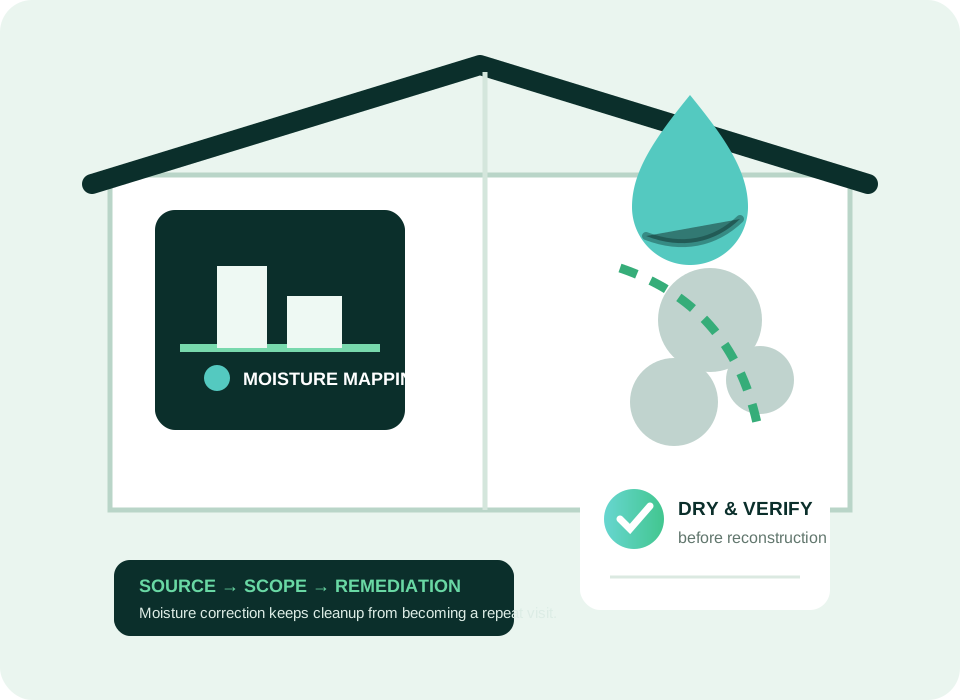
Explore serviceEffective remediation connects the water source, contaminated materials, containment, cleaning, drying, and reconstruction plan. Skipping one of those steps is how mold gets an encore nobody asked for.
Plan around occupants, furnishings, access, pets, reconstruction, and the source of the moisture.
Residential servicesCoordinate tenants, employees, HVAC, phasing, documentation, consultants, and verification.
Commercial servicesNot every job requires testing or the same level of containment. The process should match the size, materials, occupants, and moisture source.
Review the water history, visible conditions, moisture readings, affected materials, and likely concealed areas.
Protect clean spaces, remove unsalvageable porous materials, and clean remaining structural surfaces.
Correct moisture, dry the assembly, complete final cleaning, and coordinate verification when the project calls for it.
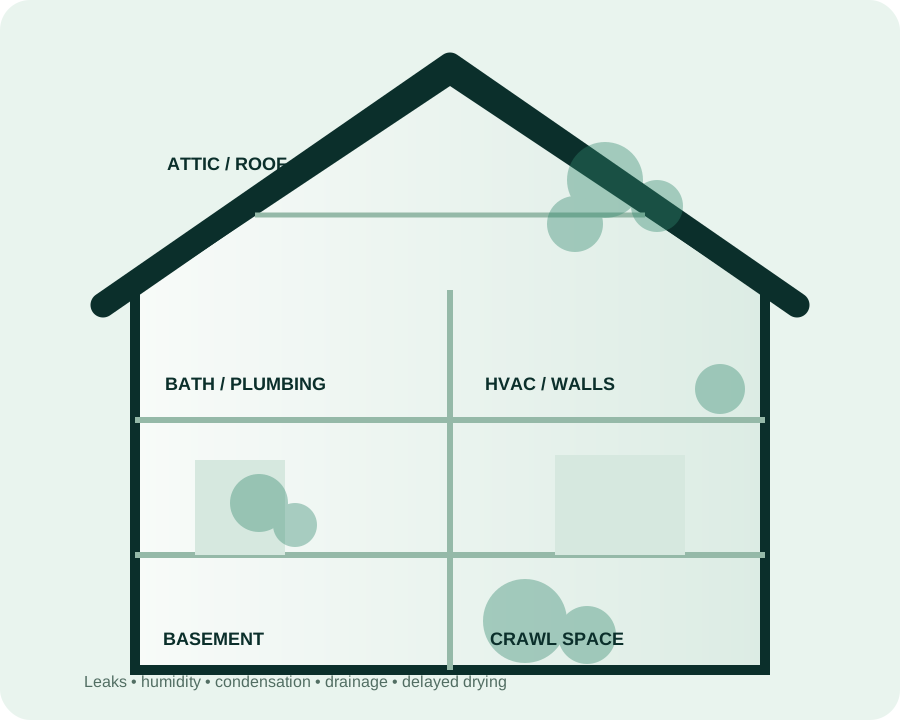
Atlanta’s warm, humid conditions can amplify leaks, condensation, crawl-space moisture, attic ventilation problems, and incomplete drying after water damage.
Choose your community to review common property conditions, available mold services, helpful resources, and the best way to get the project started.
Start with the moisture source, avoid spreading contamination, and decide whether the affected area is appropriate for professional remediation.
Read guideVisible mold often does not require sampling, but testing can be useful when it answers a specific building or project question.
Read guideMold returns when damp materials, humidity, leaks, condensation, or hidden water pathways are not corrected.
Read guideWe’ll review the affected area, moisture source, materials, and the most useful next step.